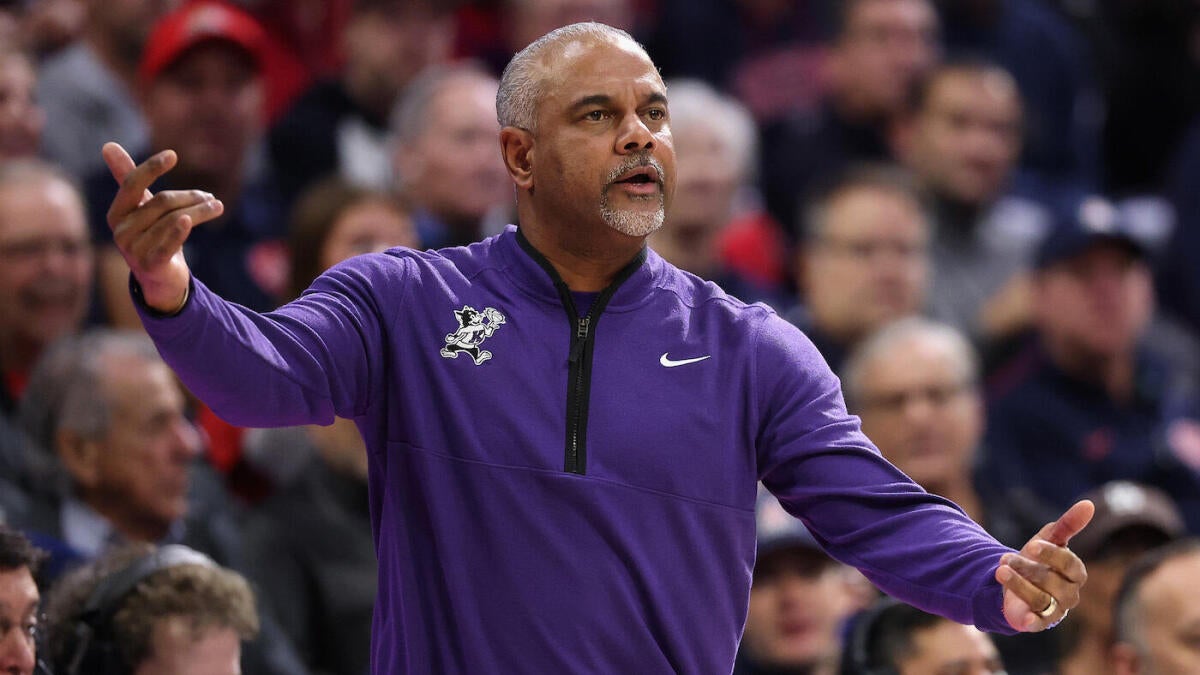
The world of college sports is often a high-stakes environment where success and failure can have dramatic financial and reputational consequences. Recently, the landscape of Kansas State University's men's basketball program was shaken by a pivotal decision: the firing of head coach Jerome Tang. This move, coming amidst a challenging season, has ignited a significant debate, particularly surrounding Tang's substantial $18.6 million buyout and the university's intention to characterize his termination as "for cause." This complex situation highlights the intricate balance between athletic performance, coach-athlete relations, and contractual obligations in modern collegiate athletics.
The Rollercoaster Ride: From Elite Eight to Early Exit
Jerome Tang’s tenure at Kansas State began with a flourish, capturing the attention and hopes of the Wildcats faithful. In his inaugural season, Tang led the team to an impressive 26 wins and an unexpected Elite Eight appearance, a feat that energized the program and solidified his promising start. However, the subsequent seasons told a different story. The momentum faded, and the Wildcats' performance steadily declined, leading to an overall record of 71-57 under his leadership, with a concerning 45-47 mark after that stellar first year.
The 2024-25 season proved to be particularly trying for K-State basketball, marked by a frustrating six-game losing streak and an abysmal 1-11 record in Big 12 conference play. The team seemed destined for its second consecutive losing season, a stark contrast to the earlier success. Fan discontent grew palpable, reaching a boiling point during a crushing 29-point home loss to Cincinnati on February 11th. In a vivid display of frustration, some fans reportedly wore paper bags over their heads, emblazoned with Tang's buyout figure, as boos rained down from the stands. This public outcry signaled a deep dissatisfaction that the university could no longer ignore, setting the stage for a critical turning point in the program's direction. For a deeper dive into the immediate aftermath and reasons, read Kansas State Fires Jerome Tang After Player Rant, Losing Season.
Jerome Tang's Post-Game Outburst: The Catalyst for "For Cause"
The decisive moment leading to Jerome Tang's dismissal transpired after the devastating loss to Cincinnati. In a post-game press conference, a visibly furious Tang delivered a scathing critique of his players, comments that would ultimately become central to K-State's justification for his firing. Tang's words were unequivocal and harsh: "This was embarrassing. These dudes do not deserve to wear this uniform, and there will be very few of them in it next year. I'm embarrassed for the university, I'm embarrassed for our fans, and our student section. It's just ridiculous." He further emphasized his disappointment by stating, "These dudes have to have some pride, man. It means something to wear a K-State uniform. It means something to put on this purple, man. Our university's all about that, and it's why I love this place, man. They don't love this place, so they don't deserve to be here."
In an attempt to send a message to his struggling team, Tang took the unusual step of removing the players' names from the back of their jerseys for the subsequent game against Houston, which the Wildcats lost 78-64. While intended as a motivational tactic, these actions, particularly his public verbal assault on the student-athletes, drew significant criticism. K-State athletic director Gene Taylor explicitly cited these comments as a primary concern, stating, "What he said about the student-athletes really concerned me." Taylor explained that Tang's "recent public comments and conduct, in addition to the program’s overall direction, have not aligned with K-State’s standards for supporting student-athletes and representing the university." This direct link between Tang's words and the university's values underscores why K-State moved to characterize the firing as "for cause." For more on the AD's perspective, see Why K-State Fired Jerome Tang: AD Cites Player Comments, Program Direction.
The $18.6 Million Question: Navigating the "For Cause" Firing
At the heart of the controversy following Jerome Tang's firing is the staggering $18.675 million buyout outlined in his contract, valid if the school parted ways with him before April 30th of the 2025-26 season. This figure, reported by USA Today, represents a substantial financial burden for the university. However, Kansas State is reportedly seeking to bypass this hefty payout by characterizing Tang’s termination as a "for cause" firing.
What Does "For Cause" Mean in a Coaching Contract?
A "for cause" termination clause in an employment contract, especially in high-profile coaching agreements, typically allows an employer to dismiss an employee without paying a specified buyout or severance package if the employee commits certain defined infractions. These infractions can include:
- Gross misconduct: Actions that are severely detrimental to the employer's reputation or operations.
- Violation of university policies or athletic department rules: Breaking established guidelines.
- Moral turpitude: Conduct that is considered contrary to community standards of morality or decency.
- Bringing shame or embarrassment to the university: Actions that negatively impact the institution's public image.
- Failure to perform duties: Although often performance-related issues lead to a no-cause firing with a buyout, extreme or intentional neglect of duties could be considered.
In K-State's case, Athletic Director Gene Taylor explicitly referenced language in Tang's contract that "addresses certain things that could potentially bring embarrassment" to the university. Taylor's concerns about Tang's comments regarding student-athletes and the subsequent negative reaction align directly with the criteria often found in "for cause" clauses related to conduct, professional representation, and potential reputational damage. By asserting a "for cause" termination, Kansas State is essentially arguing that Tang's actions and comments violated specific terms of his contract, thereby negating their obligation to pay the multi-million dollar buyout.
This situation often leads to complex legal negotiations. Both parties will likely present their interpretations of the contract and the events that transpired. While the university believes it has a strong case based on the coach's public conduct, Tang's legal team could argue that his comments, while perhaps ill-advised, do not meet the strict legal definition of a "for cause" event as per his contract's specific wording. The outcome of such disputes can be unpredictable and often hinges on the precise language of the contract and the interpretations by legal counsel or, if necessary, a court of law or arbitration panel. It serves as a stark reminder of the meticulous detail required in drafting and enforcing high-value employment contracts in sports.
The Road Ahead: Rebuilding K-State Basketball
Regardless of the eventual resolution of the financial dispute with Jerome Tang, Kansas State University now faces the critical task of rebuilding its men's basketball program. The abrupt nature of the coaching change, coupled with the public controversy, presents immediate challenges in recruiting and retaining talent. The next head coach will need to not only inject new life into the team's performance but also restore a sense of stability and positive culture, especially after the public criticism leveled at the student-athletes.
The university's firm stance on holding its coaching staff accountable for their conduct and adherence to institutional values sends a clear message about its priorities. While winning remains a crucial metric, the emphasis on supporting student-athletes and upholding the university's reputation has been underscored as equally, if not more, important. The search for a new leader will undoubtedly focus on finding someone who can deliver on-court success while embodying the "K-State standards" of integrity, respect, and professionalism, ensuring that the Wildcats can move forward with renewed purpose and a unified vision for the future.
The firing of Jerome Tang by Kansas State is a multifaceted story, emblematic of the pressures and complexities within NCAA Division I athletics. What began with an exciting Elite Eight run quickly devolved into a contentious exit, fueled by a challenging season, a fiery post-game outburst, and a massive contractual buyout. As Kansas State moves to characterize the termination as "for cause," it sets the stage for a potentially protracted legal battle over $18.6 million. Beyond the financial implications, this episode serves as a powerful reminder of the delicate balance coaches must strike between passion, performance, and adherence to institutional values in an increasingly scrutinized public arena, as the university now embarks on a crucial quest to find a new leader to guide its men's basketball program forward.